Hot summer days push the electric grid hard. Air conditioners run for long stretches. Local solar can help at useful hours.
Why hot days strain the grid
Electricity use changes with the weather. Heat and humidity raise the need for cooling, which increases demand for power in many places. That higher demand often stacks up in the afternoon.
Many homes and small businesses use more power then. Stores are open. Offices and shops are busy. Households turn on fans and air conditioning.
Solar’s midday boost
Solar output is highest during midday hours. The sun is high, and panels make the most power then. That timing lines up with many cooling needs on hot afternoons.
Here is why that matters on hot days:
- A lot of air conditioning runs during the afternoon.
- Solar projects put out their strongest power at that time.
- More midday production adds energy when demand is often high.
This does not replace the grid. It supports it at useful hours. It also spreads production across many sites in a region.
Summer patterns and your credits
Solar output is highest in the summer months and lowest in the winter months. This follows the number of daylight hours each season. Longer days bring more solar production. Shorter days bring less.
Community solar credits follow the same pattern. You will see more credits in bright summer months. You will see fewer credits in darker winter months. That seasonal swing is normal.
If you are new to this topic, our overview explains how projects and bill credits work. Read the Community Solar 101 guide: Community Solar 101 (pinned guide).
What “local” means in community solar
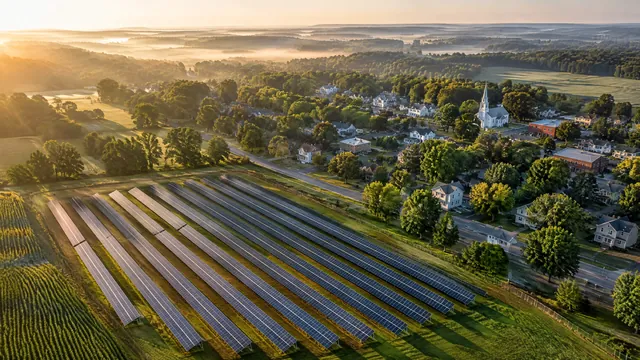
Community solar is a solar project or purchasing program in a geographic area where the benefits flow to multiple customers. These can include individuals, small businesses, nonprofits, and other groups. A single project can serve many people at once.
Because projects are local, they add power near where people use it. That can help during hot afternoons when nearby demand is up. Production stays close to homes, shops, and schools.
How your subscription supports local solar energy
Use clear words when you talk about it. Say, “I subscribe to a local solar project.” Say, “My subscription supports local solar energy.” Avoid making claims about your home’s exact power source, because project owners may keep the renewable energy certificates (RECs).
Here is how billing works in simple terms:
- Your subscription earns solar credits.
- Credits cover part of the bill from your utility.
- Subscribers pay less for the subscription than the credits are worth.
- Any discount applies to the credits, not the whole bill.
- Savings depend on your state, utility, and project.
Because credits follow the seasons, your credit amount can change month to month. Summer months often bring more credits. Winter months bring fewer.
If you want to see whether a project is open in your area, you can check your eligibility online. For a deeper primer first, read Community Solar 101 (pinned guide).
Why timing and location both matter
Timing matters because heat drives demand for cooling. Midday solar lines up with many of those hours. Location matters because local projects feed power into nearby lines.
Think about a heat wave afternoon. Many buildings need cooling. Local solar is producing its strongest output at that same time. That adds useful energy close to where people live and work.
You still use the same grid as your neighbors. Local solar adds to that shared system. It helps meet part of the afternoon load when air conditioning use is high.
Hot days will come every summer. Solar tends to peak in the middle of those days, and credits tend to peak then too. A local subscription lets you support solar when and where the timing can be most helpful.