Community solar can feel abstract at first. The panels are not on your roof, yet you may see solar credits on your bill. Here is a clear, step-by-step look at how that works.
What a community solar farm does
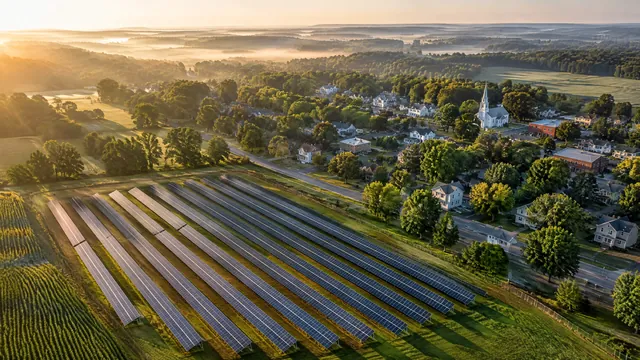
A community solar farm is a local project that serves many customers at once. The U.S. Department of Energy says community solar includes projects or purchasing programs where the benefits flow to many customers, like households, businesses, and nonprofits. Your share of the project’s production is tracked for you, even though the panels are off-site.
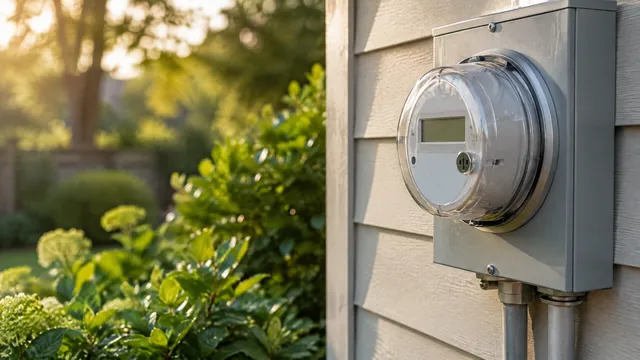
With community solar, nothing is installed at your home. No panels, no roof work, no equipment. Your utility still uses the same meter, the same wires, and the same service address. For a bigger picture view, see our pinned guide, Community Solar 101.
How the power reaches the grid
When the sun shines, the solar farm makes electricity. That electricity flows into nearby power lines and becomes part of the wider electric grid. The grid blends power from many sources.
You do not need to live next to the project to benefit. Meters at the solar farm measure how much energy it produces. The project assigns a portion of that production to each subscriber, based on each subscription. That assigned portion is the basis for the bill credits you see later.
Your utility still delivers your electricity
Your local utility keeps delivering electricity to your home or business the same way as before. The utility handles the poles, wires, and your service. Community solar does not change your utility account number or your service reliability.
How should you talk about your subscription? Use simple, accurate phrases. Say, “I subscribe to a local solar project,” and “my subscription supports local solar energy.” Do not say your home runs on solar or that you use clean energy. In many projects, the project owner keeps the renewable energy certificates (RECs).
How bill credits show up
Community solar subscribers usually receive a credit on their electric bill for their share of the project’s production. This is true even though the solar panels are not on your property. The credit reduces part of what you owe to the utility for that billing period.
Here is the simplest way to think about savings. You pay less for the subscription than your credits are worth. The credits cover part of your bill, so any discount applies to the credits, not your whole bill. Savings depend on the state, the utility, and the specific project.
Credits do not arrive in real time. They post on your utility bill on a schedule set by the program and the utility. If you ever want a refresher on bill sections and terms, see Your Electric Bill, Explained.
One bill or two bills
How you are charged depends on your utility and the project.
- One bill: In some places, your utility shows both the solar credit and the subscription charge on the same utility bill. This is often called net crediting or consolidated billing.
- Two bills: In other places, you get a utility bill that shows the solar credit, plus a separate subscription bill from the solar company.
Both approaches use the same idea. Your credit reflects your share of the farm’s production for that period. Your subscription charge is priced below the value of the credit. The timing and layout just look different.
If you ever see a month with a small credit, check the dates on the bill. It may reflect fewer sunny days in that cycle, or a partial month of production applied to your account.
Why credits change with the seasons
Solar production follows the sun. Output is highest in the summer months and lowest in the winter months. The difference comes from the number of daylight hours each season. Community solar credits follow the same pattern.
That seasonal rhythm is normal. A bright July usually brings larger credits. A dark December usually brings smaller credits. Over a full year, many subscribers see a pattern that fits their typical usage. The exact fit depends on your home or business and your subscription size.
A quick example timeline
- The farm produces energy during the month. Meters track total production.
- Your share of that energy is calculated by the project.
- The utility applies your credit based on that share on your bill cycle.
- You pay for your subscription, either on the same utility bill or on a separate bill, depending on your setup.
Here is the big picture to remember. The solar farm sends electricity into the grid. Your utility still delivers electricity to your address on the same wires. Your bill shows credits based on your share of the farm’s production. Keep your most recent bill handy, and use our pinned guides when you need them.