Earth Day is this Wednesday, April 22, 2026. Many people ask what a community solar subscription really supports. Here is a clear, accurate guide you can share.
What is community solar?
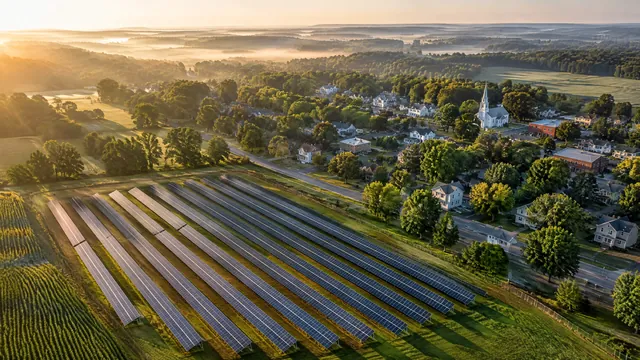
Community solar lets many people share the benefits of a solar project in their area. The U.S. Department of Energy defines it as any solar project or purchasing program, within a geographic area, where the benefits flow to multiple customers. Those customers can be individuals, small businesses, nonprofits, and other groups in the community.
If you want a fuller primer, start with our pinned guide, Community Solar 101.
What your subscription supports
Your subscription supports a local solar project. That project makes electricity and delivers it to the local grid. You help that project operate and send power into your community’s energy mix. Solar output is highest during midday hours, when the sun is strongest. So your project adds the most electricity to the grid around those times.
It is important to use accurate words. A simple, correct way to say it is: your subscription supports local solar energy.
How bill credits and costs work
Community solar is different from rooftop panels. You do not install equipment at your home. Instead, you subscribe to a local project that works with your utility.
Here is the basic model:
- The project produces electricity and delivers it to the grid.
- Solar credits from the project cover part of your utility bill.
- You pay for your subscription. You pay less than the credits are worth.
- Any discount applies to the credits, not your whole bill.
- Savings depend on your state, your utility, and the project.
If you want to see if a project may serve your address, use our quick form to check your eligibility. For a deeper overview of how credits show up on bills, read Community Solar 101.
RECs, made simple (and why words matter)
A renewable energy certificate, or REC, is created for every megawatt-hour of renewable electricity delivered to the grid. The U.S. EPA explains that whoever owns the REC has the exclusive right to claim they “use” or are “powered by” that renewable electricity.
This is why we keep subscriber language simple and accurate. Project owners may keep the RECs, or they may sell them. When RECs are kept or sold by the project, the right to make “use” claims stays with the REC owner. As a subscriber, the clearest and correct way to talk about your role is to say your subscription supports local solar energy.
Here are examples you can feel good about using:
- “I subscribe to a local solar project.”
- “My subscription supports local solar energy.”
- “I get solar bill credits from a project in my area.”
Phrases to avoid:
- “My home runs on solar from the project.”
- “I use clean energy from my subscription.”
These avoided phrases are “use” claims. Because RECs carry those claims, it is best to stick with “supports local solar energy.”
Where the electricity goes during the day
All electricity from the project goes into the local grid. Homes and businesses draw power from that same grid all day and night. Because solar output is highest around midday, the project adds more electricity during those hours.
Who community solar can serve
Community solar is designed so the benefits can reach many kinds of customers. That includes individuals, small businesses, nonprofits, and other groups in the area. Renters and homeowners can both take part when a project serves their utility territory.
If you are new to these programs, our guide Community Solar 101 explains key terms in plain language. Ready to see if you can join a local project? You can check your eligibility in a few minutes.
Clear language helps everyone understand how subscriptions work and what they support. This Earth Week, share what you have learned, and use simple, accurate words: your subscription supports local solar energy.